American Barber Institute — 48 West 39th Street, New York, NY 10018 & 121 Westchester Square, Bronx, NY 10461 Book a Tour
(212) 290-2289English (856) 316-1551Haircut

Home / Why Barbering

The Case for a Career Behind the Chair

Why Barbering?

A stable, recession-resistant, hands-on trade you can license in months — not years. In New York you can earn a Master Barber license with 500 hours of training, then work anywhere in the state, rent a booth, or open your own shop. Here's the honest case for making the switch, and how to tell if it's right for you.

500 Hours to License ~4 Months Full-Time Recession-Resistant High Income Ceiling

The Short Answer

Fast, affordable, and always in demand

500
Training hours to a NY Master Barber license
4
Months full-time (about 6–7 on weekends)
NY
One license, work anywhere in the state
1st
New classes start the first Monday monthly

The Real Picture

Barbering isn't a fallback — it's a smart career move

A lot of people arrive at barbering after something else stalled: a job that disappeared, a degree that didn't pay off, or a nine-to-five that never fit. What surprises them is that barbering isn't a consolation prize. It is a licensed skilled trade with steady demand, a short and defined training path, and multiple ways to grow — from employee to booth-renter to shop owner.

The question isn't "why settle for barbering." It's "why did I wait so long to consider it." Unlike careers that require years of school and tens of thousands in debt before you earn a dollar, barbering puts a working, income-producing credential in your hands in a matter of months. And unlike jobs that can be automated, outsourced, or cut in a downturn, a great haircut still has to be done by a skilled person, in person, on a schedule that never really slows down.

Why People Switch

The five real reasons people change careers into barbering

01 · Demand

The demand doesn't go away

Haircuts aren't optional and they can't be outsourced or automated. People need them every few weeks, in good economies and bad — making barbering unusually recession-resistant compared with jobs that vanish when budgets tighten. A licensed barber with a loyal book has work that keeps showing up.

02 · Speed

Licensed and earning in months

New York requires 500 documented training hours and a passing State Board score — not a four-year degree or crushing debt. Full-time students finish in roughly four months; weekend students in about six to seven while keeping their current job. That's a remarkably short runway to earning.

03 · Income

A real income ceiling you control

Barbering rarely pays a flat salary, and that's the point: your income tracks your skill, your clientele, and how you run your chair. New grads start modestly, established barbers do well, and owners earn from every chair. See the honest numbers in our NYC barber salary guide.

04 · Freedom

Portable and independent

A license is a passport. Work in any shop in the state, move cities, rent a booth and set your own prices, or eventually own the shop. Few careers give you that much control this early — and barbering's path to ownership is one of the most attainable in any trade. We map it in Career Paths.

05 · Meaning

The work is human and creative

If sitting at a desk drains you, barbering is the opposite. You work with your hands, talk to people all day, and send every client out looking — and feeling — better. For a lot of career-changers, that daily sense of finished, visible, appreciated work is the whole reason they never look back.

Income & Lifestyle

The money follows the skill — and the schedule is yours

Barbering pays differently than a salaried job, and understanding that difference is how you plan a real income around it.

Most barbers start on commission in an established shop, then grow into higher-earning arrangements as their book fills: booth rent, where you keep everything you cut, or ownership, where you earn from every chair in the room. Tips, rebooking, and premium services stack on top. The barbers who treat their chair like a small business are the ones who build the biggest incomes.

The lifestyle upside is just as real. You can build a schedule around family, choose morning or evening hours, take your license to another city, or go appointment-only. Very few careers offer this much independence this early. Dig into the specifics in our how much barbers make in NYC guide.
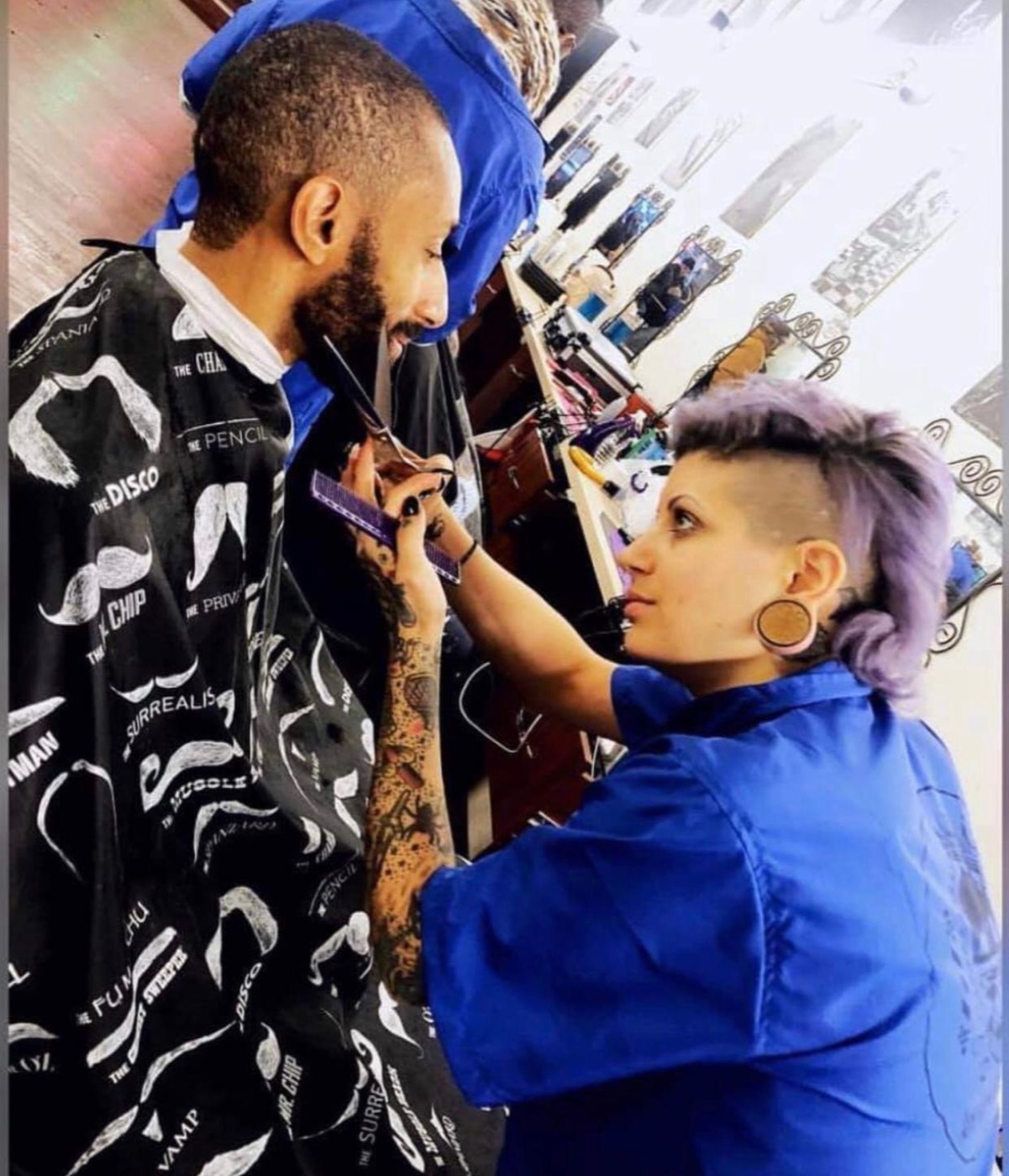
A licensed barber finishing a detailed fade for a client

Fit Check

Who barbering fits best

Barbering rewards people who like working with their hands, don't mind talking to strangers all day, and are willing to build a repeat clientele the way you'd build a small business. You do not need prior experience, an art background, or a diploma in hand — most students can start by passing an entrance exam. What you need is consistency and a genuine interest in the craft; the rest is teachable.

You don't need talent on day one. You need to show up, put in the 500 hours, and build a book. The trade does the rest.
Read: Is barbering a good career?

Honest Comparison

Barbering vs. staying put

Factor Barbering career Typical office job
Time to start earning~4 months full-time (500 hrs)Often years of schooling
Path to self-employmentBooth rent or shop ownership within a few yearsRare / capital-intensive
Demand stabilityRecession-resistant, always neededVulnerable to layoffs & automation
Income controlYou set prices & pace as you growFixed salary bands

Wage and outlook context for barbers is published by the U.S. Bureau of Labor Statistics. New York licensing is administered by the New York Department of State, Division of Licensing Services.

Common Questions

What people ask before they switch

Is barbering a good career in 2026?

For the right person, yes. Demand is steady and recession-resistant, licensing is fast and affordable, and there's a clear path from employee to booth-renter to shop owner. Income isn't guaranteed — it's built through skill and clientele — which is exactly why motivated barbers do so well.

Do I need experience or a diploma to switch to barbering?

No prior experience is required, and students who don't hold a high school diploma or GED can generally start by passing an entrance exam. You must be at least 17.

How long until I'm licensed and working?

New York requires 500 training hours — about 4 months full-time or 6–7 months on weekends — plus passing the State Board exam. New classes start the first Monday of every month, so you're rarely far from a start date.

Can I train without quitting my current job?

Yes. A weekend track lets you complete the same 500 hours over roughly 6–7 months while you keep working, which is how many career-changers make the switch without a gap in income.

How much does barber training cost?

ABI's 500-Hour Master Barber Program runs from $4,600, with payment plans available. See the full breakdown on Tuition & Funding.

Your Move

Decided barbering is your move?

American Barber Institute runs the 500-Hour Master Barber Program — morning, afternoon, and weekend tracks — with new classes the first Monday of every month. It's the accredited next step once you're ready to train.

Talk to Admissions See the Program

Classes begin the first Monday of each month

Ready to Become a Licensed Barber?

Next class starts soon. Seats fill fast — start your barber school enrollment, request a call, or speak with admissions in English or Spanish.

Request a Call
Call Now Text Us Apply Now