Etapa 01
Fundamentos
Manejo de herramientas, división del cabello en secciones, sanitización y la anatomía de un corte limpio, practicado en maniquíes hasta que los movimientos se sientan naturales.
Inicio / La Experiencia de Formación
Cómo es realmente la escuela de barbería
Clientes reales, sillas reales y un camino claro desde tu primer fade hasta tu licencia. La escuela de barbería en Nueva York es mucho más práctica que teórica: pasas la mayor parte de tus 500 horas practicando con clientes reales que pagan en un salón-clínica supervisado, lo más parecido a una barbería en funcionamiento, mientras un instructor te guía en cada paso.
La Respuesta Corta
La Gran Sorpresa
La mayor sorpresa para los estudiantes nuevos es lo poco que se pasa sentado escuchando. La barbería es un oficio de las manos, así que la formación se construye en torno a hacer.
Recibirás la teoría que necesitas —sanitización, ciencia de la piel y el cabello, principios de corte y la ley de Nueva York—, pero el corazón del programa es el salón-clínica, donde cortas a clientes reales bajo la mirada de un instructor. Ahí es donde un principiante nervioso se convierte en un barbero que puede entrar a cualquier barbería y ponerse a trabajar.
¿Listo para ver exactamente qué incluye un programa de Master Barber, hora por hora? Lee el desglose completo del Programa Master Barber de 500 Horas, o explora las salidas profesionales que abre una licencia completa.
Un Día en el Salón
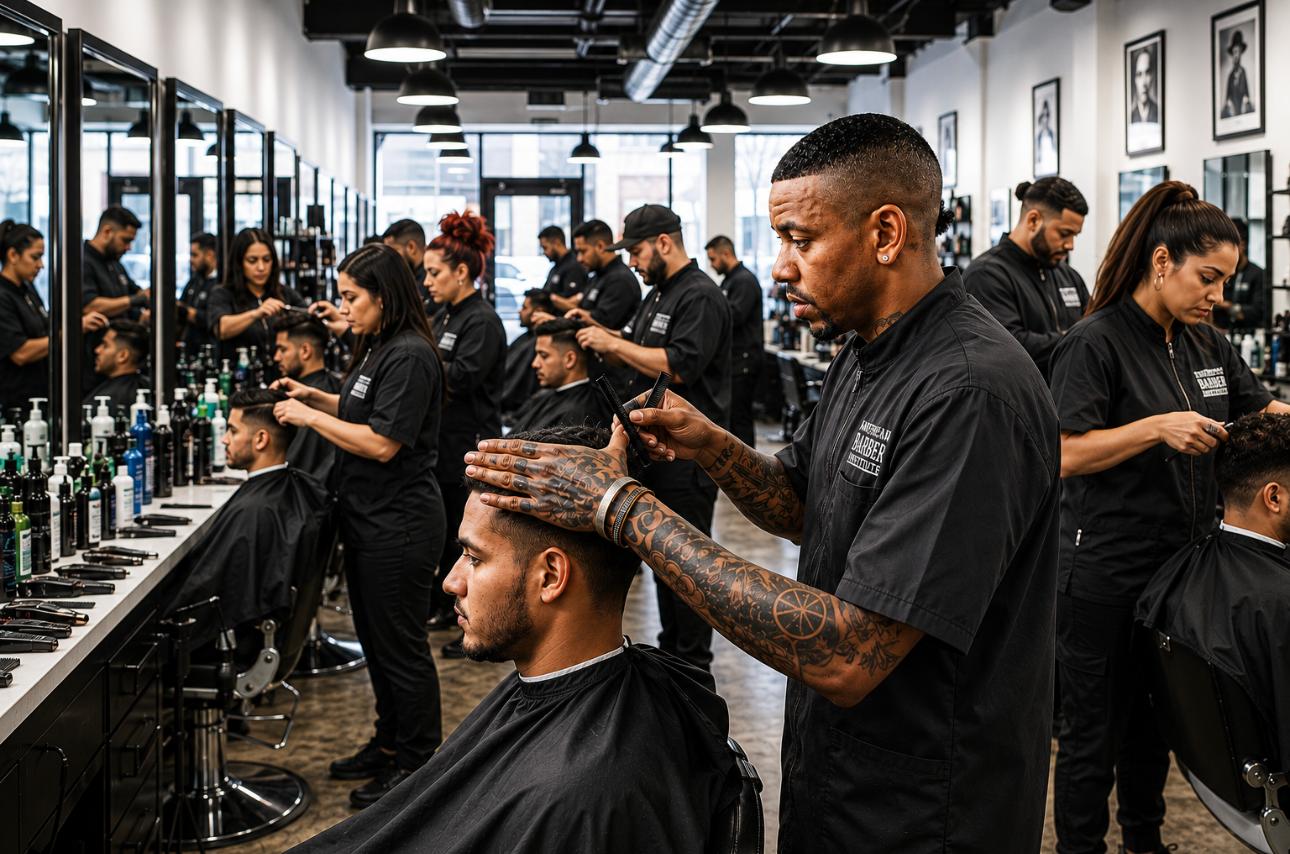
Los días varían según el programa y el horario, pero el ritmo es constante: un bloque corto de instrucción o demostración, luego práctica intensiva y después tiempo en el salón con clientes a medida que mejoran tus habilidades. Esta es la forma honesta que tiene.
| Parte del día | Qué estás haciendo | Por qué importa |
|---|---|---|
| Teoría y demostración | Desglose de técnicas, sanitización, ciencia de la piel y el cabello, ley de NY | Aprueba el examen escrito; mantiene seguros a los clientes |
| Práctica guiada | Trabajo con maniquíes, control de máquina y tijera, delineados con navaja | Desarrolla memoria muscular antes de los clientes reales |
| Salón-clínica | Clientes reales, cortes reales, supervisión de instructores | Convierte la habilidad en rapidez, confianza y una clientela |
| Preparación para el examen | Ensayos prácticos cronometrados, evaluaciones tipo examen estatal | Elimina las sorpresas el día del examen estatal |
La Progresión
No te lanzan a un cliente que paga el primer día. El programa está estructurado a propósito por etapas para que la confianza se construya antes de ponerla a prueba.
Etapa 01
Manejo de herramientas, división del cabello en secciones, sanitización y la anatomía de un corte limpio, practicado en maniquíes hasta que los movimientos se sientan naturales.
Etapa 02
Fades, tapers, tijera sobre peine, trabajo con navaja, perfilado de barba y delineados. Aquí es donde un corte deja de dar miedo y empieza a ser repetible.
Etapa 03
Personas reales, expectativas reales, un instructor a un paso. Aprendes la consulta, la rapidez y cómo recuperarte cuando un corte no sale como lo planeaste.
Etapa 04
Prácticas cronometradas que replican el examen del Estado de Nueva York para que la prueba real se sienta familiar, no una sorpresa.
Donde Todo Encaja
Cortar un maniquí y cortarle a un cliente primerizo y nervioso son habilidades distintas. En el salón-clínica practicas el trabajo completo —la consulta, la conversación, los tiempos, la presión de hacerlo bien en una cabeza de cabello real— mientras todavía es seguro cometer y corregir errores.
Al graduarte no eres solo alguien que puede cortar el cabello; eres alguien que ya lo ha hecho, en diversos tipos de cabello, cientos de veces. Esa es la diferencia entre un certificado y una carrera.
Instructores y Herramientas
Cada instructor de ABI fue estudiante de ABI y es un barbero con licencia que trabaja activamente. Cuando corrigen el ángulo de tu máquina o te guían en una consulta complicada, lo hacen con la experiencia de miles de cortes reales, no de un libro de texto.
Te entrenas con el equipo que usarás detrás de la silla todos los días: máquinas, recortadoras, navajas rectas y de seguridad, tijeras, peines y las estaciones de sanitización que exige la ley de Nueva York. Para cuando te gradúas, el equipo se siente como una extensión de tus manos, y entiendes los estándares de higiene y seguridad sobre los que te evalúa el examen estatal.
Profundiza en las técnicas específicas que dominarás en el programa de 500 Horas, y descubre a dónde te puede llevar una licencia completa en Salidas Profesionales.
Variedad Real
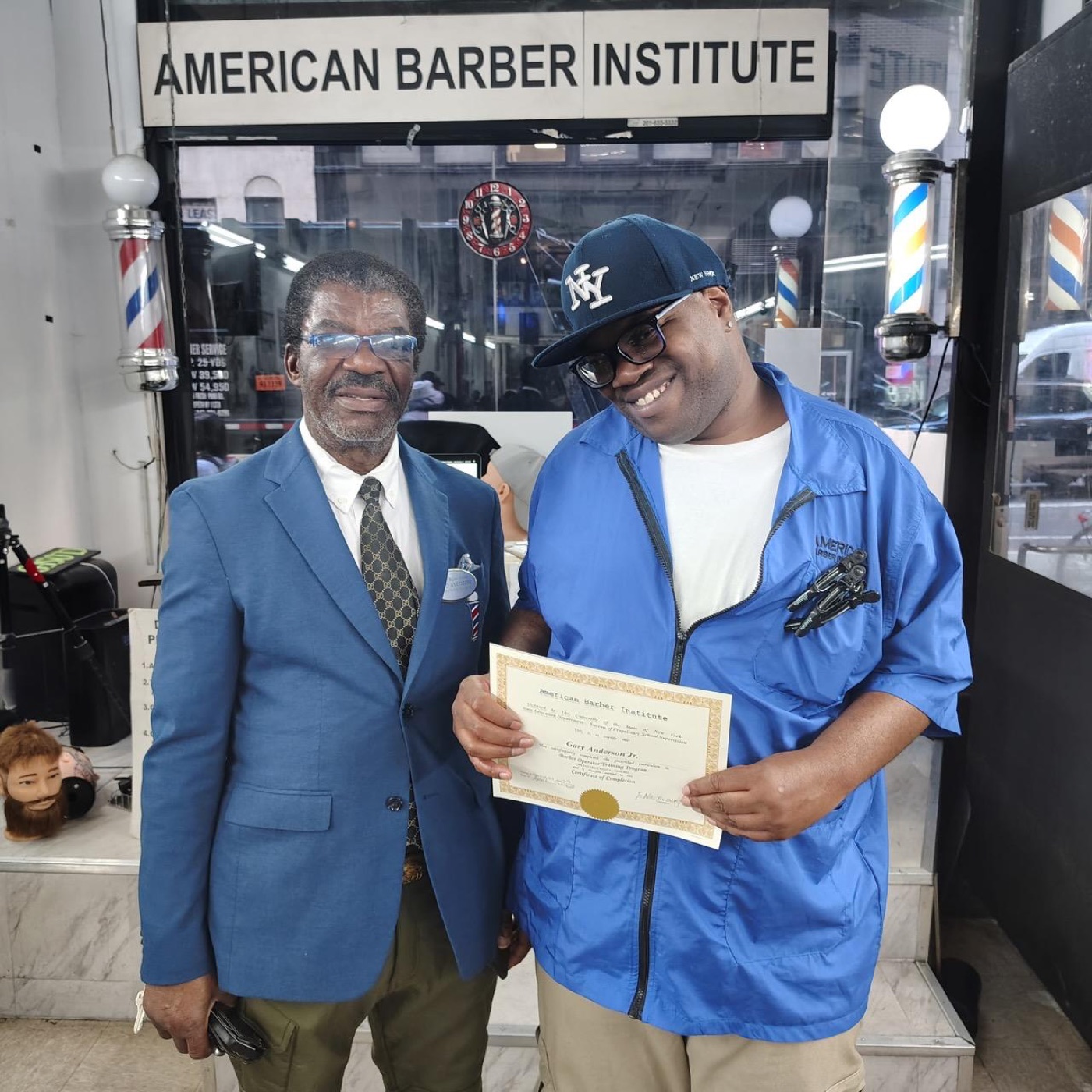
Los clientes de Nueva York son tan variados como la ciudad, y una buena formación lo refleja. Trabajarás con distintas texturas, densidades y estilos de cabello, en lugar de un puñado limitado de cortes "de escuela": esa variedad es la que te hace empleable en cualquier lugar. Esa exposición a la diversidad real es una de las mayores ventajas de formarte en un concurrido salón-clínica de NYC.
Tu Horario
El requisito de 500 horas es fijo; el ritmo no. Los estudiantes de tiempo completo terminan en unos cuatro meses. Los de fin de semana terminan en aproximadamente seis o siete meses sin dejar de trabajar. Todos los caminos llevan a la misma licencia; lo único que cambia es cómo encaja en tu semana. Mira cómo funciona en la página del programa, o planifica el costo en Colegiatura y Financiamiento.
Sigue Explorando
Personas que cambiaron de carrera cuentan cómo fue realmente formarse aquí.
Los fades, tapers y el trabajo con navaja que realmente aprenderás.
Siete salidas profesionales que abre una licencia, de empleado a dueño.
El argumento honesto a favor del oficio: ingresos, demanda y estilo de vida.
Preguntas Frecuentes
Ambos, en ese orden. Construyes los fundamentos en maniquíes y luego pasas al salón-clínica, donde cortas a clientes reales que pagan bajo la supervisión de un instructor. La mayor parte de tus 500 horas son práctica real, no clases teóricas.
Es normal; la mayoría de los estudiantes empiezan con cero experiencia. La formación está estructurada por etapas específicamente para principiantes, comenzando con el manejo de herramientas y el trabajo con maniquíes antes de que toques a un cliente real.
Nueva York exige 500 horas de formación. Eso equivale a unos 4 meses a tiempo completo o de 6 a 7 meses con horario de fin de semana, seguidos del examen estatal.
Sí; la preparación para el examen está integrada en el programa con ensayos prácticos cronometrados de tipo examen estatal, para que la prueba real se sienta como algo que ya has hecho.
Las licencias y los exámenes de barbería de Nueva York son administrados por el Departamento de Estado de Nueva York, División de Servicios de Licencias.
Comienza Ahora
American Barber Institute te forma con una clientela real y diversa en un salón-clínica supervisado y te prepara para la licencia de Master Barber de NY, con horarios de mañana, tarde y fin de semana que comienzan el primer lunes de cada mes.
Las clases comienzan el primer lunes de cada mes
La próxima clase comienza pronto. Los cupos se llenan rápido — inscríbete, solicita una llamada, o habla con admisiones en inglés o español.